Coloured Concrete Cranbourne, Even Colour Built to Last
Coloured concrete gives a driveway, path or alfresco area a finished look that ties in with the roof, render and brickwork of the house, instead of the flat grey of a standard pour. The colour comes from mineral oxide pigments, either mixed right through the concrete at the batching plant or broadcast onto the fresh surface as a dry-shake colour hardener, so it is part of the slab rather than a coat of paint sitting on top. Peak Concreting Cranbourne pours coloured concrete for new homes in the growth estates, replacement driveways in established streets and rural-residential properties across the City of Casey and Cardinia Shire. Colours are chosen from a supplier chart and confirmed in writing before the concrete is ordered, the base is prepared to suit sand, reactive clay or estate fill, and the finished surface is sealed to protect the colour. Call 0485 032 128 for a free on-site measure and a written coloured concrete quote.
GET A FREE QUOTE
Peak Concreting Cranbourne
Coloured Concrete Cranbourne: Driveways, Paths, Patios and Alfresco Areas
Coloured concrete in Cranbourne is used wherever an owner wants concrete to look like part of the design of the home rather than a utility surface. It suits the new houses going up in Clyde North, Cranbourne West and Officer, where a fresh driveway is often the last big piece of the front yard, and it suits older homes in Hampton Park and the Cranbourne township, where a cracked grey driveway is being replaced. The colour does not change how the slab is built. The same base preparation, thickness, reinforcement and joints apply as for a plain pour, and the colour is added on top of that sound structure. What changes is the planning: the shade, the colouring method and the sealer all have to be settled before the truck is booked, because coloured concrete cannot be recoloured cheaply once it has set.
Coloured concrete driveways
The driveway is the most common place coloured concrete is laid, and also the place where it matters most, because a driveway is the largest single area of hard surface in the front of a house. A coloured concrete driveway is usually poured 100mm thick for cars, or 125mm where heavier vehicles such as a boat trailer or caravan will use it, with steel mesh such as SL82 and control joints cut at regular spacings. A mid-tone colour hides tyre marks, oil spots and dust far better than plain grey, which is why charcoal and mid grey shades are popular on driveways. The council crossover between the property boundary and the road is a separate approval, and the construction side of the driveway, including base, levels and the crossover, is covered in detail on the concrete driveways page.
Coloured paths, patios and alfresco areas
Side paths, front paths, patios and covered alfresco areas are often poured in the same colour as the driveway so the whole yard reads as one design. Coloured concrete suits these areas well because it is smooth enough for outdoor furniture and easy to sweep, while still breaking up the look of a large paved area. Under a covered alfresco, the colour is protected from the worst of the sun and holds its tone for longer. In open areas that get wet, the surface is finished with a light broom or a textured sealer rather than left smooth, because a smooth coloured surface can be slippery in rain, and slip resistance matters more than the shade.
Coloured borders, bands and feature strips
Colour does not have to cover the whole area. A popular approach is to pour a contrasting coloured border around a driveway or patio, or a band along the edge of a path, so the main surface stays a neutral tone while the edge picks up a darker accent. Borders are usually formed as separate pours or separated by a joint, which also gives a natural place for control joints and keeps any slight colour difference between pours looking deliberate. A charcoal border around a lighter field, or a sandstone band beside lawn, can frame an area cleanly without the cost of colouring every square metre.
Why colour is a new-pour decision
Integral colour and dry-shake hardeners only work while the concrete is fresh, so this page is about colouring concrete as it is poured. That makes colour a decision for the planning stage of a new driveway, path or patio, not something added later. An existing grey slab that is still structurally sound can be given a new colour with a thin coloured overlay or spray-on finish, and that work is a separate trade covered on the concrete resurfacing page. Where a slab is cracked, sunken or breaking up, the usual answer is to remove it and pour new coloured concrete, which gives the full depth of colour and a fresh structural base.
Peak Concreting Cranbourne
How Concrete Is Coloured: Integral Oxide and Dry-Shake Colour Hardener
There are two main ways to colour fresh concrete, and they produce different results. Integral colour is mixed through the whole batch, so the slab is the same colour from top to bottom. Dry-shake colour hardener is spread over the surface while it is still plastic and worked into the top few millimetres. Both rely on mineral oxide pigments, mostly iron oxides, which are chemically stable and do not break down in sunlight the way paints and dyes can. The right method depends on the colour wanted, the finish and the size of the job, and it is chosen before quoting because it changes how the pour is run on the day.
Integral oxide mixed through the batch
Integral colour is added at the batching plant, or sometimes in the agitator truck, as a measured dose of oxide pigment by weight of the cement in the mix. Because the colour runs right through the concrete, a chip, scratch or worn patch still shows the same colour underneath, which makes integral colour the most forgiving option for driveways that take daily traffic. The colour is softer than a surface hardener, because the pigment is spread through grey cement and stone, so integral colour tends to give earthy, natural tones rather than bright ones. Accurate batching is critical, because every truck on the job must carry the same pigment dose for the colour to match from one end of the driveway to the other.
Dry-shake colour hardener broadcast onto the surface
A dry-shake colour hardener is a premixed powder of cement, fine hard aggregate and pigment. It is broadcast by hand over the fresh concrete once the bleed water has evaporated, then floated and trowelled into the surface, usually in two applications. The result is a dense, hard-wearing top layer with a stronger and more vivid colour than integral colour can give, because the pigment is concentrated in the surface rather than spread through the whole slab. The trade-off is that the colour is only a few millimetres deep, so a deep chip can reveal grey concrete underneath. Dry shake demands skilled finishers working quickly, especially on the hot, dry and windy days Cranbourne gets in summer.
Grey and off-white cement bases
Normal concrete is made with grey cement, and that grey base dulls whatever pigment is added to it. Charcoal, dark grey and deep earthy tones sit well on a grey cement base, but light or bright colours such as pale sandstone, cream and some terracotta shades can look muddy. For those, the mix can be made with off-white or white cement, which lets the pigment show its true tone. Off-white cement costs more and is not always stocked for small jobs, so it is usually reserved for lighter colours where the difference is clearly visible. The colour chart from the supplier normally states which shades are designed for a grey base and which need an off-white one.
Peak Concreting Cranbourne
Why Cranbourne Owners Choose Peak Concreting for Coloured Concrete
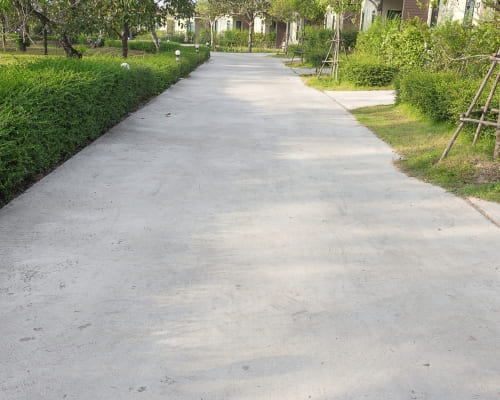
Coloured concrete leaves less room for error than a plain pour, because uneven batching, rushed finishing or poor curing all show up as patches of a different shade, and there is no simple way to fix them afterwards. Owners across the Casey and Cardinia corridor choose a crew that plans the colour from the start and treats the base, the pour and the sealing as one job.
One crew from base preparation to the final seal coat
The same crew handles excavation, base preparation, formwork, reinforcement, the pour, the finishing and the sealing, so nothing is handed between subcontractors halfway through. That matters with coloured concrete, because the people finishing the surface need to know exactly which pigment and method were ordered and how the slab was set out. The base is built to suit the ground: compacted properly on the Cranbourne sand belt, with allowance for movement on reactive clay, and with extra care on deep or uneven fill in new estates, so the coloured surface is not let down by cracks from below.
Colour confirmed in writing before the concrete is ordered
Before any concrete is ordered, the colour name or code from the supplier chart, the colouring method and the cement base are written down and confirmed with the owner. Where a colour is uncertain, a small sample or a look at a finished job in the area is arranged first. Writing it down protects both sides: the order placed with the plant is exactly what was agreed, and there is no disagreement on the day about whether the colour on the truck is the colour that was chosen. Changes after ordering are possible but can add cost, so the decision is made carefully up front.
Quotes that name the oxide, the finish and the sealer
Each written quote names the colour and colouring method, the surface finish such as broom, trowel or a textured edge, the sealer to be applied, the thickness and the reinforcement. That makes it possible to compare quotes properly, because two prices for coloured concrete can describe very different jobs. A cheaper quote may use a lighter pigment dose, no sealer or a thinner slab, and those differences only show up years later as faded, patchy or cracked concrete. Seeing the details in writing lets an owner decide where to spend and where to save.
Peak Concreting Cranbourne
Coloured Concrete Driveway Cost and What Drives the Price
A coloured concrete driveway costs more than a plain grey one, but usually less than exposed aggregate, stamped concrete or quality pavers. The structure underneath, including excavation, base, formwork, mesh and labour, is the same as for any driveway and makes up most of the price. Colour adds the cost of the pigment and any extra finishing time, and the sealer adds a further amount. Because every site is different, prices are worked out after a measure rather than from a flat rate, and the factors below explain why two coloured driveways of the same size can be priced quite differently.
How a coloured concrete price per square metre is built
Coloured concrete is quoted per square metre, with the total built from several parts. The base cost covers removal of any old concrete, excavation, base material and compaction, formwork, mesh and the pour itself. The colour cost is added on top, and depends on the method and the pigment dose. Finishing and sealing are then added, along with any borders, steps or extra cuts. Small areas cost more per square metre than large ones, because setting up, the minimum truck load and travel are spread over fewer metres. A clear, accessible driveway on flat ground is the cheapest case, while a tight or sloping site with old concrete to break out sits at the other end.
Integral colour versus dry shake on cost
Integral colour is charged by the cubic metre of concrete, because the pigment is in the whole mix, so the cost rises with the volume poured. A thicker driveway costs more to colour integrally than a thinner path of the same area. Dry-shake hardener is charged by the area covered, plus the extra labour of broadcasting and working it in, which needs skilled finishers on the day. On a standard driveway, the two methods often land close together, with dry shake slightly ahead because of the labour. The choice is usually made on the colour and durability wanted rather than on price alone.
Darker shades and heavier pigment doses
Not all colours cost the same. Pale and mid tones need only a light pigment dose, while strong, dark colours such as deep charcoal or rich red need a heavier dose to reach the shade on the chart, and the pigment is the expensive part of the colour cost. Colours that need off-white cement cost more again, because that cement is priced above grey. The sealer also adds to the cost, and coloured concrete should always be sealed, so it is worth including in the comparison from the start. An owner choosing between two similar shades can sometimes save by picking the one with the lighter dose.
Peak Concreting Cranbourne
Coloured Concrete Versus Plain Concrete, Pavers and Other Finishes
Coloured concrete sits between plain grey concrete and the more decorative finishes in both cost and appearance. It is a good fit for owners who want a cleaner, more designed look without the texture of exposed stone or the pattern of a stamped surface. The comparisons below are the ones most often weighed up before a driveway or patio is booked.
Coloured versus plain grey concrete
Plain grey concrete is the cheapest hard surface and does its job well, but it shows tyre marks, oil spots, rust stains and dirt clearly, and it can look stark against a new house. Coloured concrete costs more, yet a mid or dark tone disguises everyday marks and ties the driveway into the colours of the home. Both are built the same way underneath, so they are equally strong. The main extra commitment with colour is sealing: plain concrete is often left unsealed, while coloured concrete needs a sealer and periodic resealing to keep its tone.
Coloured concrete versus pavers
Pavers come in a wide range of colours and can be lifted and relaid to reach pipes or repair a sunken area. They are also more labour-intensive to lay, which usually makes them dearer than coloured concrete, and their joints can grow weeds, collect sand and let individual pavers sink or rock over time, especially on poorly compacted fill. Coloured concrete gives one continuous surface with only control joints, so there is less to maintain. Pavers suit owners who want a modular look or easy access below; coloured concrete suits those who want a low-maintenance solid surface.
Exposed aggregate versus coloured concrete driveways
Exposed aggregate and coloured concrete are the two most compared driveway finishes. Exposed aggregate shows the natural stone in the mix, giving a textured, non-slip surface that hides dirt very well, and its colour comes from the stones rather than pigment. Coloured concrete has a smoother, more uniform look and usually costs less. In practice the two are often combined, with a coloured oxide added to the mix of an exposed aggregate driveway to tint the cement between the stones. The stone-led finish, its blends and its cost are covered on the exposed aggregate concrete page.
Colour combined with a stamped, stencilled or honed finish
Colour is often the base layer for other decorative finishes. Stamped concrete uses a colour hardener plus a contrasting release agent, then presses a pattern such as slate, cobblestone or timber into the surface, while a stencilled finish lays a paper pattern before colour is applied to create the look of pavers or tiles. Those pattern finishes are covered on the stamped concrete page. A honed finish grinds the coloured surface lightly to reveal fine stone, giving a smooth, modern look with a coloured tint, and that is covered on the honed concrete page. Indoors, a coloured slab can also be ground and sealed as a polished concrete floor.
Peak Concreting Cranbourne
Coloured Concrete Colours and Choosing From a Colour Chart
Coloured concrete colours are chosen from a concrete colour chart supplied by the concrete or pigment supplier, which shows each shade as a printed swatch or a small sample tile. Charts usually run from greys and charcoals through to sandstones, buffs, browns, reds and terracotta. The chart is the starting point rather than the final answer, because the poured slab will never match a printed swatch exactly. Choosing well means looking at the colour in the context of the house, the light and the way the surface will be used.
Charcoal, grey and slate tones
Charcoal, mid grey and slate tones are the most popular choice for driveways across the newer estates in Cranbourne, Clyde North and Officer. They suit the dark roofs, rendered walls and neutral facades common on new homes, and they hide tyre marks and oil spots well. Darker shades also make a driveway look cleaner for longer. The trade-off is heat and efflorescence: a dark surface gets hotter underfoot in summer, and any white bloom from salts rising through the slab shows up more clearly on charcoal than on a lighter colour. Mid greys are a safe balance between hiding marks and staying cooler.
Sandstone, buff and earthy tones
Sandstone, buff, brown and terracotta shades give a warmer look that suits brick homes, older houses in the established streets and rural-residential properties around Cranbourne South, Devon Meadows and Pearcedale. Lighter tones stay cooler in the sun, which makes them a good choice for patios, paths and pool-side areas where people walk barefoot. They show dirt and tyre marks more than charcoal does, but they also hide efflorescence and dust better. For the cleanest version of these lighter colours, the mix may need off-white cement so the grey of the cement does not dull the tone.
Matching the colour to the roof, render and brickwork
The best concrete driveway colours pick up a colour already on the house rather than introducing a new one. A charcoal roof suits a charcoal or mid grey driveway, a cream render suits a sandstone or light grey, and a red or brown brick suits a warmer brown or terracotta. A large driveway in a strong contrasting colour can overpower the front of a home, so a slightly softer shade than the brightest option is often the better choice. Looking at existing coloured driveways nearby, in the same light and under the same sun, is one of the most reliable ways to judge how a colour will really look.
Why chart swatches and the poured slab look different
A colour chart is printed or made from small samples under controlled conditions, while a real slab is a large area of concrete affected by the cement, the stone, the water in the mix, the finishing and the weather on the day. Colours also look darker when wet and lighter when dry, and a sealer can deepen the tone noticeably. As a result, the poured colour is close to the chart but rarely identical, and slight variation across a large area is a natural part of coloured concrete. Where an exact tone matters, viewing a finished slab or a small sample before ordering is the safest step.
Peak Concreting Cranbourne
Getting an Even Colour: Batching, Finishing and Curing
Colour consistency is the hardest part of coloured concrete to get right, and most complaints about coloured driveways come from patchy or blotchy colour rather than the shade itself. Consistency depends on three things being controlled across the whole job: the mix in every truck, the way the surface is finished, and the way the slab cures in its first days.
One supplier, one mix and consistent water
Every load on a coloured job should come from the same plant, with the same cement, sand, stone and pigment dose. Changing supplier halfway through a job, or mixing in a load from a different batch, can produce a visible step in colour. Water matters just as much: adding water on site to make the concrete easier to work lightens the colour and weakens the surface, so a load that has been watered down will dry to a paler shade than the one beside it. Larger driveways are planned so that joints fall between loads, and accelerators containing calcium chloride are avoided because they are known to cause mottled colour.
Finishing and curing without blotches
Finishing has to be even across the whole surface. Over-trowelling some areas, or finishing one section later than another, can darken or burnish patches. Curing is the other common cause of blotches: plastic sheeting laid directly on coloured concrete can leave dark and light marks where it touches, and some wet-curing methods leave water stains. Coloured concrete is usually cured with a compatible curing compound or a cure-and-seal product applied evenly, and kept moist and protected for at least seven days. A consistent cure gives a consistent colour and a stronger surface.
Pour-day weather and colour
Weather affects colour as much as strength. On hot, dry and windy days, which Cranbourne gets regularly in summer, the surface dries faster than the concrete below, which can cause plastic shrinkage cracks and uneven colour as some areas are finished before others. Coloured pours on those days are scheduled early in the morning, with sun and wind protection ready. In cool, wet winters, slower setting and damp ground can delay finishing and cause bloom on the surface, so coloured work is timed around forecast rain where possible. Choosing the day carefully is one of the simplest ways to get an even result.
Peak Concreting Cranbourne
Fading, Efflorescence and Sealing Coloured Concrete
Coloured concrete is a long-lasting finish, but it does change over time, and most of the changes owners worry about are predictable and manageable. Understanding why colour appears to fade or go patchy helps keep a coloured driveway looking its best for many years.
Why coloured concrete fades in sun and UV
The iron oxide pigments used in coloured concrete are very stable in sunlight, so the pigment itself rarely fades. What owners see as fading is usually the surface wearing, dirt building up, a white bloom of efflorescence, or the sealer breaking down under UV and turning chalky. Areas in full sun and heavy traffic, such as the wheel tracks of a driveway, change fastest, while covered areas hold their tone longer. Some black pigments based on carbon are less stable than iron oxides and can fade more noticeably, which is one reason charcoal shades are usually made with iron oxide blacks.
Efflorescence and the white bloom
Efflorescence is a white, powdery or chalky deposit that appears on the surface of concrete, usually in the first months after pouring. It forms when water carries soluble salts from inside the slab to the surface, where they react with air and dry as a white film. It is a natural process rather than a defect, but it shows clearly on dark coloured concrete. Light efflorescence often weathers away on its own, and heavier deposits can be cleaned off with a suitable efflorescence cleaner before sealing. A good sealer, applied once the slab has cured, helps limit further bloom by reducing the water moving through the surface.
Sealing and resealing to hold the colour
Sealing is the most important step in keeping coloured concrete looking new. A sealer protects the surface from oil, stains, water and UV, and many sealers also deepen and enrich the colour, giving a slightly wet look. Clear acrylic sealers are common on coloured driveways and paths, and tinted sealers can be used later to refresh a tired colour. Most outdoor coloured concrete needs resealing every few years, depending on sun and traffic, and resealing before the old coat has fully worn through keeps the colour even. Sealer types, slip-resistant additives and resealing are covered in detail on the concrete sealing page.
Colour matching an extension to an existing coloured slab
Adding to an existing coloured driveway, such as a widening or a new path off the side, raises the question of matching. Even with the same colour code and supplier, a new pour will look different at first, because the old concrete has weathered, carried years of traffic and lost some of its sealer. The new section usually settles closer over time and after both areas are sealed together, but an exact match is rarely possible. The neatest results come from separating the new and old areas with a joint or a contrasting border, so any difference looks planned. Damaged or cracked sections in an older slab are assessed first, and concrete repairs covers that work.
TESTIMONIALS
What Our Coloured Concrete Customers Say About Us
The Process
3 Step Process For Your Coloured Concrete Needs

1. Free On-Site Assessment and Quote
Every job starts at the property. The area is measured, the existing concrete or bare ground is checked for movement, drainage and access, and the finish and budget are talked through on site. A fixed, itemised written quote follows, listing the preparation, the concrete or overlay system, the finish and the sealer, with any variation agreed in writing before work starts. There is no pressure and no obligation. Call 0485 032 128 to book an assessment.

2. Preparation, Then the Pour or Overlay
Once the quote is agreed, the site is prepared for the ground it sits on. For new concrete that means excavation, a compacted base, formwork, reinforcement and control joints set out to suit sandy Cranbourne soil, reactive clay or engineered fill. For repairs and resurfacing it means cleaning, grinding and fixing cracks before anything new goes down. The concrete or overlay is then placed and finished, with the timing set around heat, wind and rain.

3. Curing, Clean-Up and Handover
New concrete and overlays are cured before they carry any real load, which is what gives them their strength and limits surface cracking. Formwork is removed, the site is cleaned, and the handover covers when the surface can be walked on, driven on and washed, and how and when it should be resealed.
Coloured Concrete in Cranbourne
FREQUENTLY ASKED QUESTIONS
Everything you need to know about our Coloured Concrete in Cranbourne
Is coloured concrete a good idea for a driveway?
Coloured concrete is a good choice for most driveways, because it costs less than most decorative finishes and hides tyre marks and dust better than plain grey. Integral colour runs through the full depth of the slab, so wear and small chips do not show a different colour underneath. The main extra commitment is sealing, which keeps the colour rich and protects it from oil and stains. It suits owners who want a clean, designed look without the texture of exposed stone or a stamped pattern.
How do you get coloured concrete?
Concrete is coloured with mineral oxide pigments, either mixed through the whole batch at the plant or broadcast onto the fresh surface as a dry-shake colour hardener. Integral colour gives a softer, natural tone that runs right through the slab. Dry shake gives a stronger, brighter surface colour a few millimetres deep. The method is chosen before the concrete is ordered, because it changes how the pour and finishing are run on the day.
Is coloured concrete more expensive than plain concrete?
Coloured concrete costs more than plain concrete, but the extra is usually a moderate part of the total, because the base, formwork, reinforcement and labour are the same for both. The added cost comes from the pigment, any off-white cement for lighter colours, extra finishing time and the sealer. Strong, dark colours need a heavier pigment dose and cost more than pale ones. It is generally cheaper than exposed aggregate, stamped concrete or quality pavers.
What is the best colour for a concrete driveway?
The best colour is usually one that picks up a colour already on the house, such as the roof, render or brickwork. Charcoal and mid grey are the most popular driveway colours because they suit modern homes and hide tyre marks and oil spots well. Sandstone and buff tones suit brick homes and stay cooler, but show dirt more. Viewing a finished coloured driveway nearby is a reliable way to judge how a colour will look in real light.
Does coloured concrete fade?
The iron oxide pigments used in coloured concrete are stable in sunlight and rarely fade themselves. Most apparent fading comes from surface wear, dirt, efflorescence or a sealer breaking down under UV. Keeping the surface sealed and resealing every few years, before the old coat has worn through, keeps the colour even and rich. Covered areas hold their colour longer than areas in full sun and heavy traffic.
Why does new coloured concrete have white patches?
White patches on new coloured concrete are usually efflorescence, a deposit of salts carried to the surface by water moving out of the slab as it dries. It is a natural process and is more visible on darker colours such as charcoal. Light efflorescence often fades on its own over the first months, and heavier deposits can be cleaned before the concrete is sealed. Patchy colour that is not white is more often caused by uneven water, finishing or curing during the pour.
Request A Free Coloured Concrete Quote
BUSINESS
SERVICES
OPERATING HOURS
Sun: 7:00am - 9:00pm
Mon: 7:00am - 9:00pm
Tue: 7:00am - 9:00pm
Wed: 7:00am - 9:00pm
Thu: 7:00am - 9:00pm
Fri: 7:00am - 9:00pm
Sat: 7:00am - 9:00pm