About Peak Concreting Cranbourne: Built Around the Ground Underfoot
Peak Concreting is a concreting business based in Cranbourne, working across the City of Casey and Cardinia Shire in Melbourne's south-east. This page explains how the business works: why each job starts with the ground, how jobs are planned and quoted, who does the work, the standards it follows and what happens from the first call to handover. For a quote, call 0485 032 128.
GET A FREE QUOTE
Peak Concreting Cranbourne
About Peak Concreting Cranbourne: The Idea Behind It
Peak Concreting was set up around one observation: in the Casey and Cardinia corridor, most failed concrete fails from the ground up. The same driveway poured the same way behaves differently depending on what sits underneath it, and this corner of Melbourne has three very different kinds of ground within a short drive. The Cranbourne township sits on the sand belt, the sandy country that drew the Royal Botanic Gardens Cranbourne to the area and that was mined for sand from the 1920s. Sand is low in reactivity, which helps, but it settles if the base is not compacted properly. The new estates to the north and east sit mostly on reactive clay and engineered fill, where the ground shrinks in dry spells and swells in wet ones. Further south, around Koo Wee Rup, the land is the drained Koo Wee Rup Swamp, with soft, peaty soil and a high water table.
The business exists to treat those differences as the first question on every job rather than an afterthought. It handles new work and repair work alike, from first driveways and house slabs on the growth estates to replacement work in established suburbs such as Hampton Park, where housing built from the 1970s onward has seen decades of ground movement crack and lift driveways and paths. The approach does not change with the size of the job: read the site, prepare the base, reinforce correctly, cut the joints in the right places and cure the concrete properly.

Peak Concreting Cranbourne
How Each Site Is Read Before Pricing
Before anything is priced, the site itself is assessed in person, because the answers that decide how a slab is built are found on the block, not over the phone. The first question is what the concrete will sit on. On new estate lots the soil report and site classification matter, because AS 2870 sorts residential sites into classes from S for slightly reactive ground through M, H1 and H2 to E for extremely reactive clay, and the class guides the slab and footing design. Class M is the most common across Melbourne, but the right answer comes from the lot itself, not from the suburb.
The next questions are about water and levels. Concrete needs a fall that carries water away from the house and towards a drain, and on flat, low-lying ground that fall has to be designed in rather than left to chance. Access comes next: whether a concrete truck can reach the pour or a pump is needed, and whether old concrete, tree roots or soft, wet patches have to come out before any base goes in. On repair work the assessment looks for the cause of the damage, such as a sunken base, roots or poor joints, because the cause decides whether a surface can be repaired, given concrete and driveway resurfacing, or needs to be replaced.
Peak Concreting Cranbourne
The Crew Behind Every Pour
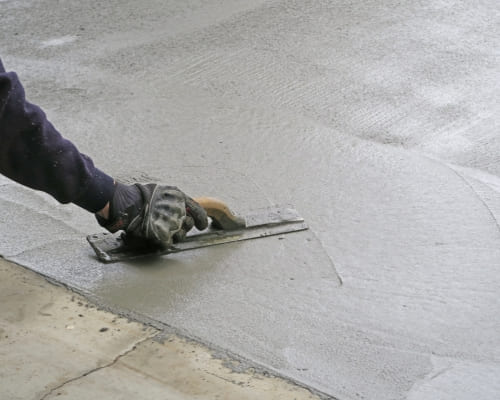
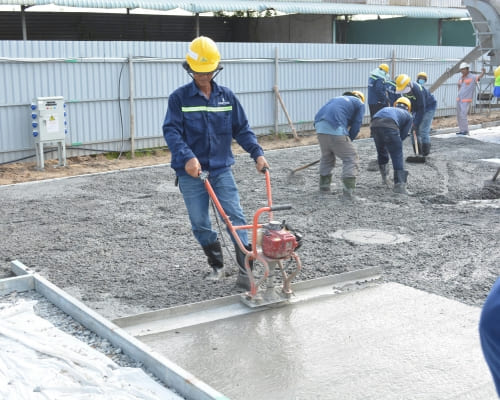
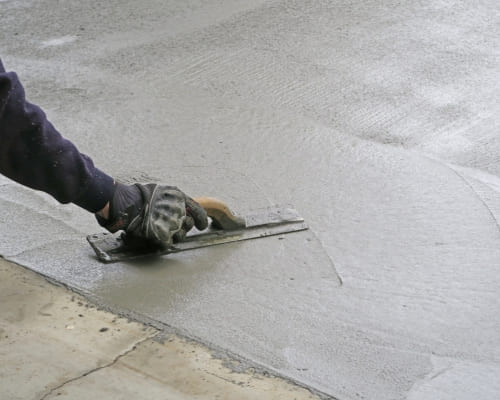
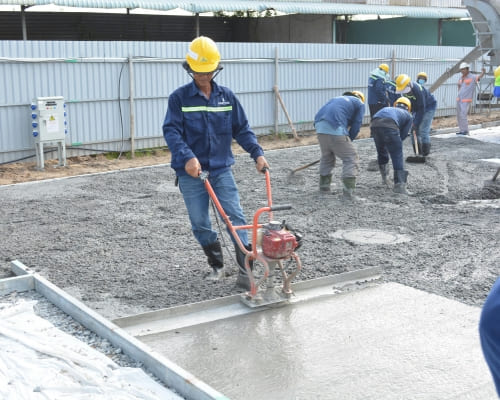
Peak Concreting runs as a hands-on crew rather than a high-volume operation spread across dozens of sites. The same crew that prepares the base also screeds, finishes and cures the concrete, so nothing is lost between one stage and the next. That continuity matters most on the parts of a job nobody sees afterwards: compaction of the sub-base, the position of the mesh within the slab and the timing of the finish.
Weather shapes the crew's day as much as the plan does. Summers in Melbourne's south-east bring hot, dry, windy days and heatwaves above 40C, which pull moisture out of fresh concrete fast enough to cause plastic shrinkage cracking. On those days pours start early, the surface is protected and curing begins as soon as the finish allows. Cool, wet winters bring the opposite problem: slow setting, wet sub-bases and pour dates that move with the forecast. Either way, new concrete is kept moist and protected for at least the first seven days. Where a job needs more than a concreting crew, such as an engineered slab design for difficult ground or new drainage, the crew works alongside those trades rather than pouring around them.
Peak Concreting Cranbourne
Standards and Specifications the Work Follows
Residential concrete in Victoria is built against published Australian Standards, and the work follows them. AS 2870 covers residential slabs and footings, including the site classes that decide how a slab on reactive clay is designed. AS 3600 covers structural concrete, which applies when a job moves beyond a domestic slab into engineered elements. For house and shed slabs and footings, the site class and the design come first and the concrete follows them.
Driveways, paths and decorative finishes are not engineered structures, so the work there follows established trade practice. A typical residential driveway is 100mm thick, rising to around 125mm where heavier vehicles will use it, laid on a compacted crushed rock base with reinforcing mesh such as SL72 or SL82 sitting in the right part of the slab. Control joints are cut or tooled at regular spacing so that the shrinkage every slab goes through is drawn to a neat line instead of wandering across the surface. Concrete strength is specified by grade in MPa to suit the job, and the finish, whether broom, exposed aggregate or a decorative surface, is chosen with the use and the slope in mind. Where existing concrete has cracked or lifted, concrete repairs start by finding the cause, because patching a symptom on moving ground rarely lasts.

Peak Concreting Cranbourne
Quotes, Pour Day and Handover
A job with Peak Concreting follows a clear path. The first call covers what the job is, where it is and roughly when it is needed, and a time is set for the site visit. The visit produces a written, itemised quote covering excavation and base, thickness, reinforcement, finish, joints and clean-up, so there is no doubt about what is included, and any change to the scope is agreed before the work goes ahead. Before the pour, the crew confirms access, any council crossover permit the job needs and how the site will be left, then excavates, prepares the base and sets the forms.
On pour day the concrete is placed, finished and protected. Handover comes with plain advice: how long to keep foot traffic and cars off the new surface, when sealing makes sense on a decorative finish, and how hairline shrinkage at a joint differs from cracking that needs a second look. The service area runs across the City of Casey and Cardinia Shire, from Clyde North and Officer to the larger blocks around Cranbourne South and Tooradin, and the homepage lists every service and suburb covered for concreting across Cranbourne and the surrounding corridor. For a site visit and quote, call 0485 032 128.
TESTIMONIALS
What Cranbourne Homeowners Say About Peak Concreting Cranbourne
Request A Free Quote
GET A FREE QUOTE
BUSINESS
SERVICES
OPERATING HOURS
Sun: 7:00am - 9:00pm
Mon: 7:00am - 9:00pm
Tue: 7:00am - 9:00pm
Wed: 7:00am - 9:00pm
Thu: 7:00am - 9:00pm
Fri: 7:00am - 9:00pm
Sat: 7:00am - 9:00pm