Concrete Paths Cranbourne That Stay Level and Shed Water
A concrete path gives safe, mud-free access around a property: down the side of the house, through the garden, out to the shed and clothesline, and from the driveway to the front door. Around Cranbourne the work splits between new paths on the growth estates, where the ground is often reactive clay or engineered fill, and replacement paths at older homes where the original path has cracked, sunk or lifted. A path that lasts depends on what sits under it: a dug-out and compacted base, the right thickness and steel, a fall that carries water away from the house, and joints that control where it cracks. Peak Concreting Cranbourne lays garden paths, side paths, entry paths and footpaths across the City of Casey and Cardinia Shire, and the written quote sets out the width, thickness and finish. Call 0485 032 128 for a free on-site quote on concrete paths.
GET A FREE QUOTE
Peak Concreting Cranbourne
Concrete Paths Cranbourne: Garden Paths, Side Paths and Entry Paths
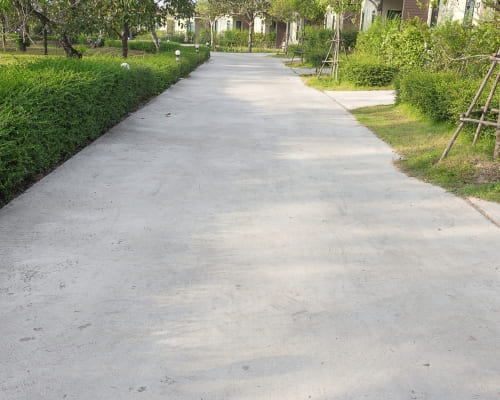
Concrete paths in Cranbourne cover more ground than most owners expect. A typical block needs a path down at least one side of the house, a route from the back door to the clothesline and shed, and an entry path linking the driveway to the front door. On larger lots in Cranbourne South, Devon Meadows and Pearcedale the paths get longer, running out to sheds, chook pens and water tanks. Each path does a slightly different job, so the width, thickness and finish are chosen to suit how it is used, not copied from one standard drawing.
Side paths down the house
The side path is the workhorse of most suburban blocks. It carries wheelie bins to the street, gives access to taps, the gas supply and the hot water unit, and keeps the narrow strip beside the house from turning to mud in a wet Cranbourne winter. Because it runs right against the house, it has to sit below the weep holes and slope away from the wall so water never pools against the brickwork. Side paths are often hemmed in by fences and service pipes, so formwork, access for the concrete and any downpipes or pits along the route are worked out before anything is dug.
Garden paths through lawns and beds
Garden paths link outdoor spaces: from the alfresco to a vegetable patch, around a feature tree, or along a garden bed to a side gate. They can be straight or laid in gentle curves, and the curve is set out on the ground with pegs and a hose before the formwork goes in so the owner can see the line. A garden path is usually lightly trafficked, but it still needs a compacted base and a fall, because a path that holds a puddle after rain is the one that grows moss and becomes slippery. Where a path borders lawn, a flush edge lets the mower run straight over it.
Paths to sheds, clotheslines and back gates
The paths that get used every day are often the last ones built: the route to the clothesline, the shed, the bins, the back gate and the water tank. Without them, the same strip of lawn gets worn to bare dirt and the washing basket gets carried through mud all winter. A shed path that will carry a ride-on mower, wheelbarrow or trailer is poured thicker and reinforced like a light-duty slab, while a clothesline path can be a standard pedestrian path. Joining these paths into one connected route around the yard is usually cheaper than pouring them on separate visits.
Entry paths from the driveway to the front door
The entry path is the one visitors see first, so it is usually the most carefully finished. It links the driveway or street to the porch, often with a step or two where the house floor sits above the garden. The entry path needs to be wide enough for two people to walk side by side, set level with the porch so there is no trip lip at the door, and finished so it matches or complements the driveway. On new homes the entry path is often poured at the same time as the driveway, which keeps the concrete colour and finish consistent.
Plain or decorative: matching the path to the driveway
Most paths are finished in plain concrete with a light broom texture, which gives good grip and costs the least. Where the driveway or alfresco already has a decorative surface, the path can carry the same look so the outdoor areas read as one design. A path can be finished in exposed aggregate concrete, given colour with an oxide through the mix, or finished with a stamped or honed surface, and each of those finishes is explained in detail on its own service page. The choice of finish changes the price and the grip underfoot, so it is settled at the quote, not on the day of the pour.

Peak Concreting Cranbourne
How a Concrete Path Is Built: Base, Thickness, Mesh and Fall
A concrete path looks simple, but most failed paths around Cranbourne fail for the same few reasons: concrete poured straight onto topsoil, a base that was never compacted, too little thickness for what the path carries, no fall, or joints in the wrong place. The building sequence below is the same whether the path is a short garden link or a long run to a shed, and each step is there to stop one of those failures.
Setting out the route and levels
Every path starts with a string line and a set of levels. The route is pegged out on the ground, the finished height is set off the house slab, the porch or the driveway, and the fall is worked out so water runs towards a garden bed, a grated drain or the street rather than back towards the house. Existing services are located before digging, including gas, water and stormwater lines, which often run along side paths. Getting the levels right at this stage decides whether the finished path meets every door and step cleanly.
Digging out and compacting the path base
Grass, topsoil and roots are dug out down to firm natural ground, because topsoil compresses and rots and will let a path sink. A layer of crushed rock is then spread and compacted with a plate compactor in thin layers until it is firm and even. On the Cranbourne sand belt this compaction is what stops a path settling, and on reactive clay it gives the path a uniform bed so it moves as one piece. Soft spots, old tree roots and pockets of builder's rubble found during the dig are removed and replaced, not covered over.
How thick a concrete path should be, and where mesh goes
A standard pedestrian path is usually poured at around 75 to 100 millimetres thick, with 100 millimetres the safer choice on reactive clay or where a wheelbarrow or ride-on mower will use it. A path that will carry a car or trailer is treated as a light driveway and poured thicker. Paths are commonly reinforced with SL72 mesh sitting on bar chairs so the steel ends up within the concrete rather than lying on the base, where it does nothing. The concrete itself is a standard 20 or 25 MPa mix for domestic paths, placed at a workable consistency without extra water added on site.
A fall away from the house so water drains
Every path needs a gentle fall so rain runs off instead of sitting on the surface. Next to the house the fall runs away from the wall, so water drains into the garden or a drain rather than soaking the foundations. On a long side path the water may need a grated strip drain or a connection to stormwater, especially on flat blocks where the yard has nowhere for water to go. The path also has to stay below the weep holes and the house's damp-proof course, which is one reason a new path cannot simply be poured on top of an old one.
Control joints and tooled path edges
Concrete shrinks as it dries, and a path will crack somewhere unless it is told where. Control joints are cut or tooled across the path at regular intervals so any shrinkage cracking happens in a straight, neat line at the joint. An expansion joint goes wherever the path meets the house slab, the driveway or a step. The edges of the path are rounded with an edging tool so they do not chip, and where a raised kerb or a mowing strip is wanted along the side of a path, that work is covered by concrete kerbs and edging.
Pouring and curing paths in hot, windy weather
Cranbourne summers bring hot, dry and windy days, sometimes over 40C, and a thin path loses moisture fast. Concrete that dries too quickly develops fine surface cracks and a weak, dusty top. On hot days paths are poured early in the morning, the surface is protected from wind and sun, and the slab is kept moist or sealed with a curing compound. Paths need at least seven days of curing to gain strength. In cool, wet winters the concern is the reverse: pours are timed around rain so the surface is not washed out before it sets.
Peak Concreting Cranbourne
Why Cranbourne Owners Use Peak Concreting for Concrete Paths
Peak Concreting builds paths as part of a concreting business that also lays driveways, slabs and footings across the City of Casey and Cardinia Shire, so a path is built to the same base and steel standard as the larger jobs. The difference owners notice is in the preparation and the finishing details, because that is where cheap paths cut corners.
One crew from dig-out to clean-up
The same crew sets out the route, digs out the base, fixes the formwork and steel, pours and finishes the concrete, and cleans up the site. There is no hand-over between an excavation contractor and a finisher where the levels or base preparation can be lost. Spoil and old concrete are taken away, lawn edges are left tidy, and the formwork is stripped once the concrete has set. For the owner that means one point of contact and one crew responsible for how the path performs, from the base up.
Written quotes that list width, thickness and finish
Every quote is written after a site visit and lists what is being built: the length and width of each path, the thickness, the steel, the finish, the joints and any removal of an old path. That makes quotes easy to compare, because a path quoted at 75 millimetres without mesh is a different product from one at 100 millimetres with SL72 mesh on a compacted base. If drainage work, a step or a ramp is needed, it is listed as its own line so nothing appears as an extra on the day.
Paths that meet the driveway and patio without a lip
A new path almost always joins something that is already there: a driveway, an alfresco slab, a porch or a set of steps. The new concrete is set to finish flush at those joins, with an expansion joint between, so there is no lip to catch a foot, a pram wheel or a wheelie bin. Where an existing slab has sunk or lifted at the join, that is pointed out at the quote rather than poured against, because a path built to meet a slab that is already out of level will inherit the problem.
Peak Concreting Cranbourne
What a Concrete Path Costs in Cranbourne
A concrete path in Cranbourne is quoted per square metre after a site visit, because the same length of path can vary a great deal in price depending on access, ground and finish. Rather than quote figures that may not apply to a particular block, the sections below explain how the price is built and what moves it, so quotes can be compared fairly.
How a per square metre path price is built
A path price combines the excavation and removal of soil, the crushed rock base and compaction, formwork, steel mesh, the concrete itself, labour to place and finish it, joints, and clean-up. Concrete trucks and pumps carry minimum charges, so the setup costs are spread across the size of the job. As a relative guide, a plain broom-finished path is the most economical, a coloured path costs more, and an exposed aggregate or stamped path costs more again because of the extra materials and finishing time.
What a path around the house costs
A path around the whole house is one of the most common requests, and because it is a long, narrow pour the price per square metre is usually lower than for a short garden path. The total depends on the perimeter, the width, how much of the route has tight access, and whether downpipes, pits or a strip drain have to be worked in. Pouring the full perimeter in one visit is cheaper than doing one side at a time, because the setup, concrete delivery and pump costs are paid once.
Access, old path removal and short runs
Narrow side access is the biggest single cost driver on paths. Where a truck cannot reach, the concrete is pumped or barrowed in, and the base material has to come in the same way. Breaking up and removing an old cracked path adds labour and tip fees. Short runs, such as a single path to a clothesline, carry a higher rate per square metre because the minimum charges for concrete, pumping and setup still apply. A cracked path that only needs a section replaced may be better handled as concrete repairs than as a full new path.
Peak Concreting Cranbourne
Concrete Paths Versus Pavers, Gravel and Stepping Stones
Concrete is not the only way to build a path, and on some jobs it is not the best one. The usual alternatives are pavers, gravel and stepping stones or timber, and each suits a different budget, look and level of upkeep. The comparison below sets out where concrete wins and where another material may be the better choice.
Concrete compared with pavers
Pavers can be lifted and relaid, which is useful over pipes or where the ground is expected to move, and they come in a wide range of looks. They can be cheaper to lay as a do-it-yourself job, but a professionally laid paved path on a proper compacted base is usually similar to or more expensive than plain concrete. Over time pavers can sink unevenly, sprout weeds in the joints and become a trip hazard on reactive clay. A concrete path is one continuous surface with nothing to weed and far less to maintain, which is why most side and service paths are concrete.
Concrete compared with gravel and permeable paving
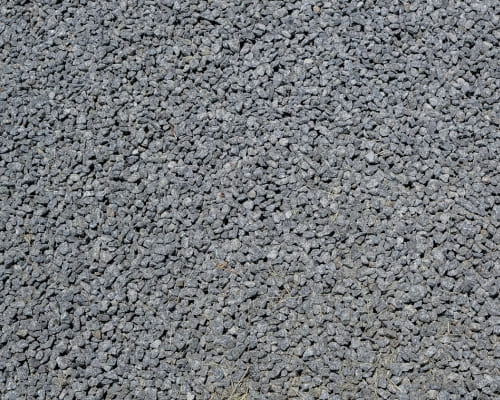
Gravel is the cheapest path surface and lets rain soak straight through, which suits informal garden routes and rural blocks. It is harder to push a wheelbarrow, wheelie bin or pram across, it migrates into lawns and beds, and it needs topping up. Permeable paving, laid as open-jointed pavers or porous concrete over a free-draining base, lets water soak away while giving a firmer surface, and it can suit areas where runoff has nowhere to go. On most residential paths, plain concrete with a proper fall and drainage gives a firmer, lower-maintenance surface.
Concrete compared with stepping stones and timber
Stepping stones set into lawn or gravel suit low-use garden routes where a continuous path would look heavy. They are cheap to lay but are not suitable for wheelbarrows, bins or anyone unsteady on their feet. Timber boardwalks and decking paths look natural but need regular maintenance, can become slippery when damp, and eventually rot or need replacing. For a path used daily, for access around the house, or for anyone who needs a smooth and stable surface, concrete gives the longest life for the least ongoing work.
Peak Concreting Cranbourne
Concrete Footpaths: Width, Step-Free Access and Council Footpaths
Concrete footpaths do more than get people from one door to another. A footpath has to be wide enough for the people and equipment that use it, smooth enough for wheels, and finished so it grips when wet. Where a footpath runs outside the property boundary, it also becomes a council matter. This section covers the practical decisions that turn a path into a usable footpath.
How wide a path or footpath should be
Width is set by what the path carries. A side path needs to fit a wheelie bin with room for the hand pushing it. A garden path for one person can be narrower than an entry path, which should let two people walk side by side. Paths used with a wheelchair, walker or pram need extra width, particularly where they turn a corner or meet a door. The width is agreed at the quote and pegged out on site, because a path that feels generous on paper can feel tight once fences, plants and downpipes are in place.
Step-free thresholds and gentle ramps
For owners planning ahead for ageing in place, or for anyone with a wheelchair or walker, a path can be built without steps. The path is set level with the porch or door threshold, and where there is a height difference a gentle ramp replaces the steps. Where the ramp has to meet a specific accessibility standard or a design from an occupational therapist, it is built to that specification. Landings at the top of a ramp and at doors give room to stop and turn, and the surface is finished for grip.
Slip-resistant finishes for wet winter days
Cranbourne winters are cool and wet, and shaded paths on the south side of a house can stay damp for days. A broom finish, drawn across the path while the concrete is still green, leaves fine ridges that grip underfoot and is the standard finish for footpaths. Steel-trowelled smooth concrete looks clean but is slippery when wet, so it is avoided outdoors. Where a sealer is used on a path, an anti-slip additive is mixed into the final coat. Keeping the fall correct matters too, because standing water grows moss and algae.
Footpaths on the nature strip and council consent
The footpath along the street and the nature strip in front of a property usually sit in the road reserve, which belongs to the council, not the owner. Before any concrete work in that area, consent may be needed from the City of Casey or Cardinia Shire, and the council sets the standard the work has to meet. Damage to a council footpath during a building project can also be the owner's responsibility to repair. Permit requirements, fees and specifications are checked with the relevant council before the job is quoted, so the work is approved before anything is poured.
Peak Concreting Cranbourne
Concrete Paths on Sand, Reactive Clay and Soft Ground
Ground conditions around Cranbourne vary from loose sand to reactive clay to soft, wet lowland, and a path built the same way on all three will not last on at least one of them. Paths are light structures, so they move with the ground more readily than a house slab, which makes the base preparation even more important.
Paths on the Cranbourne sand belt
Parts of Cranbourne sit on the sand belt, the same sandy ground that drew the Royal Botanic Gardens Cranbourne to the area and that was sand-mined from the 1920s. Sand is low in reactivity, so it does not swell and shrink much with the seasons, which is good for a path. The risk is that loose sand settles if it is not compacted, so the path sinks along one edge or at a joint. On sandy ground the base is compacted thoroughly in layers and the edges are kept well supported so the sand cannot wash out from under the path.
Paths on reactive clay and estate fill
Most of the newer estates in Clyde, Clyde North, Cranbourne North, Cranbourne West and Officer are built on reactive clay, often with engineered fill placed during subdivision. Reactive clay swells when wet and shrinks when dry, and fill that was not compacted evenly settles over time. A path on this ground is given a full crushed rock base, steel mesh, closer joints and a consistent fall so water does not soak into the clay beside the path. Watering the garden heavily along one edge of a path causes uneven movement, so planting is planned with the path.
Soft, wet ground toward Koo Wee Rup and Western Port
Toward Koo Wee Rup, Tooradin and the Western Port lowlands, much of the ground is former swamp, with peaty, organic soils and a high water table. These soils compress and shrink in dry years and stay wet in winter. A path on this ground needs a deeper base of compacted crushed rock, careful attention to drainage so water has somewhere to go, and realistic expectations about some settlement over time. Where the ground is especially soft, a path may be better laid in sections with joints that allow for movement.
Tree roots, downpipes and garden beds beside a path
Tree roots are a common cause of lifted and cracked paths around Cranbourne, particularly at established homes in suburbs such as Hampton Park and Berwick. Large trees close to a planned path are noted at the quote, and a root barrier may be suggested. Downpipes that discharge onto the ground beside a path saturate the base and soften it, so they are connected to stormwater or redirected. Garden beds against a path should finish below the path surface so soil and mulch do not wash over it. A path that has already lifted or cracked from roots is assessed for repair first.
TESTIMONIALS
What Our Concrete Paths & Footpaths Customers Say About Us
The Process
3 Step Process For Your Concrete Paths & Footpaths Needs

1. Free On-Site Assessment and Quote
Every job starts at the property. The area is measured, the existing concrete or bare ground is checked for movement, drainage and access, and the finish and budget are talked through on site. A fixed, itemised written quote follows, listing the preparation, the concrete or overlay system, the finish and the sealer, with any variation agreed in writing before work starts. There is no pressure and no obligation. Call 0485 032 128 to book an assessment.

2. Preparation, Then the Pour or Overlay
Once the quote is agreed, the site is prepared for the ground it sits on. For new concrete that means excavation, a compacted base, formwork, reinforcement and control joints set out to suit sandy Cranbourne soil, reactive clay or engineered fill. For repairs and resurfacing it means cleaning, grinding and fixing cracks before anything new goes down. The concrete or overlay is then placed and finished, with the timing set around heat, wind and rain.

3. Curing, Clean-Up and Handover
New concrete and overlays are cured before they carry any real load, which is what gives them their strength and limits surface cracking. Formwork is removed, the site is cleaned, and the handover covers when the surface can be walked on, driven on and washed, and how and when it should be resealed.
Concrete Paths & Footpaths in Cranbourne
FREQUENTLY ASKED QUESTIONS
Everything you need to know about our Concrete Paths & Footpaths in Cranbourne
How much does it cost to lay a concrete path in Cranbourne?
A concrete path in Cranbourne is priced per square metre after a site visit, because access, ground conditions, thickness and finish all change the price. A plain broom-finished path is the most economical choice, coloured concrete costs more, and exposed aggregate or stamped finishes cost more again. Narrow side access, removing an old path and short runs all push the rate up, while pouring the full path around a house in one visit brings it down. Every quote is itemised so it can be compared line by line.
Is it cheaper to lay pavers or a concrete path?
Pavers laid as a do-it-yourself job can cost less in materials, but a professionally laid paved path on a compacted base is usually similar to or dearer than plain concrete. Concrete also needs far less upkeep, with no joints to weed and no individual pavers to sink or lift. Over the life of the path, plain concrete is usually the cheaper option for side paths and service paths. Pavers suit areas where the path may need to be lifted to reach pipes.
How thick should a concrete path be?
A pedestrian concrete path is usually poured at around 75 to 100 millimetres thick. On reactive clay, or where a wheelbarrow or ride-on mower will use the path, 100 millimetres is the safer choice. Paths that will carry a car or trailer are built thicker, like a light driveway. Steel mesh such as SL72 on bar chairs is commonly added to hold cracks tight.
Can concrete be poured directly on soil for a path?
Concrete should not be poured straight onto topsoil or grass. Topsoil compresses and contains organic matter that breaks down, which leaves voids under the path and lets it sink and crack. The topsoil is dug out down to firm natural ground and replaced with a compacted crushed rock base. On firm, well-compacted natural ground a thin base may be enough, but on Cranbourne's sand, clay and estate fill a proper base is what makes a path last.
Can a concrete path be laid right next to the house?
A concrete path can be laid against the house, and side paths usually are. It has to stay below the weep holes and the damp-proof course, and it must fall away from the wall so water drains into the garden or a drain rather than towards the foundations. An expansion joint separates the path from the house slab. Pouring a new path over an old one often raises the level too high, so the old path is usually removed first.
How long before a new concrete path can be walked on?
Light foot traffic is usually fine after about a day, once the surface has set firm. The concrete keeps gaining strength for weeks, so wheelbarrows, mowers and heavy items are kept off for at least seven days while the path cures. In hot, windy weather the path is kept moist or covered with a curing compound so it does not dry out too quickly. Furniture and pot plants are best left off a new path for the first week.
Request A Free Concrete Paths & Footpaths Quote
BUSINESS
SERVICES
OPERATING HOURS
Sun: 7:00am - 9:00pm
Mon: 7:00am - 9:00pm
Tue: 7:00am - 9:00pm
Wed: 7:00am - 9:00pm
Thu: 7:00am - 9:00pm
Fri: 7:00am - 9:00pm
Sat: 7:00am - 9:00pm