Concrete Resurfacing Cranbourne, a New Surface Without the Repour
Concrete resurfacing gives a sound but tired slab a new wearing surface without breaking it out. A polymer-modified cementitious overlay is bonded to the existing concrete, finished as a spray-on texture, a stencilled pattern or a smooth microtopping, and then sealed. Around Cranbourne most of this work is on driveways, paths and patios poured twenty or more years ago, where the slab is still level but the top has weathered, stained or worn through. Peak Concreting Cranbourne checks the slab before quoting, because an overlay only lasts as long as the concrete beneath it: a slab that has heaved, sunk or keeps cracking is quoted for repair or replacement instead. Where resurfacing is the right call, it is quicker, quieter and usually cheaper than a full repour, and the surface is back in use within days. Call 0485 032 128 for a free on-site assessment and a written quote.
GET A FREE QUOTE
Peak Concreting Cranbourne
Concrete Resurfacing Cranbourne: Spray-On, Stencilled and Microtopping Overlays
Concrete resurfacing in Cranbourne covers three overlay families, and the right one depends on the look wanted, the traffic the surface carries and the condition of the slab underneath. All three are cementitious, so they bond chemically and mechanically to the old concrete rather than sitting on top of it like paint, and all three are sealed at the end. What separates them is thickness, texture and how much pattern they carry.
Spray-on cementitious resurfacing
A spray-on system is a polymer-modified cement mortar applied through a hopper gun over a primed slab, typically only a few millimetres thick in total. It leaves a textured, lightly stippled surface that hides surface wear, light staining and old patch repairs, and the texture gives useful grip on a sloping driveway. It is the most common choice for Cranbourne driveways and paths because it is hard-wearing under car tyres and forgiving on surfaces that are not perfectly flat. The base coat is usually tinted, and a second coat can be sprayed in a contrasting tone to give a mottled, natural-stone effect.
Stencilled overlays, borders and patterns
A stencilled overlay uses the same spray-on mortar, but a paper stencil is laid over the base coat before the texture coat goes on. When the stencil is lifted, the base colour shows through as grout lines, producing a brick, ashlar slate, cobble or tile pattern. Borders are a popular addition, framing a driveway or patio in a running brick band. Because the pattern sits in a thin layer, a stencil overlay suits an existing slab with sound joints. It is a different product from stamped concrete, which is pressed into fresh concrete during a new pour and carries a deeper texture.
Microtopping and skim coats for a smooth modern finish
Microtopping is a fine-grained cement and polymer coating trowelled on in thin layers, usually one to three millimetres in total. It gives a smooth, matte, seamless look that suits alfresco areas, entries and garage floors, and it can be tinted or left in a natural grey. A skim coat is the same idea used to level and refresh a surface before a sealer goes on. Microtopping wears well under foot traffic but is kept off heavy-vehicle areas unless the particular system is rated for them.
Colour, texture and slip resistance
Overlays are coloured with oxide pigments in the mortar, a tinted sealer, or both. Lighter colours stay cooler in a Cranbourne summer, and a mid-tone hides tyre marks and dirt better than either a very light or a very dark finish. Texture and slip resistance are linked: a spray-on knockdown finish is naturally grippy, while a smooth microtopping relies on an anti-slip additive in the final sealer coat. Where a surface is often wet, such as a driveway that falls toward the street, the anti-slip additive is specified as standard rather than offered as an extra.
Peak Concreting Cranbourne
How an Overlay Is Bonded to Old Concrete on Cranbourne Sand and Clay
An overlay fails at the bond, not in the coating itself, so most of the work happens before any colour goes down. Ground conditions around Cranbourne matter too, because they decide whether the slab underneath is stable enough to carry a thin topping. The township sits on the sandy Cranbourne sand belt, which is low in reactivity but settles where a base was poorly compacted, while the newer estates to the north and east sit on reactive clay and engineered fill that shrink and swell with the seasons. A slab that settled once and has stopped can be resurfaced. A slab that is still moving will crack straight through any overlay.
Grinding and cleaning to open the old surface
Old concrete is usually sealed, glazed or contaminated with oil, and a cementitious coating will not grip a smooth or dirty surface. The slab is pressure cleaned and degreased, then diamond ground or shot blasted to strip old sealer and open the surface to a profile the overlay can key into. Thin overlays need a light profile, roughly the feel of medium sandpaper, while thicker systems need a coarser one. Grinding also removes the weak, dusty top layer that forms on weathered concrete, which would otherwise peel away and take the overlay with it.
Routing cracks and patching spalls before the overlay
Cracks are routed out to a clean groove and filled with a flexible or rigid filler, depending on whether the crack is still moving. Spalled areas, where the surface has flaked or broken away, are cut back to sound concrete and rebuilt with a repair mortar. These are the same techniques used for concrete crack repairs, and they stop old damage from showing through the new surface. A crack that keeps opening is a sign of movement below the slab and is treated as a structural question, not a cosmetic one.
Primer, base coat, texture coat and sealer
Once the slab is clean and repaired, a bonding primer goes on so the overlay grips instead of drying out against thirsty old concrete. The base coat follows, then the texture or pattern coat, and each layer is left to set before the next is applied. The last step is sealing, usually with an acrylic or polyurethane sealer that protects the colour, resists staining and carries any anti-slip additive. Sealer types and how often they need renewing are covered in more detail on the concrete sealing page.
Curing times before foot and car traffic
Most overlay systems take light foot traffic after about a day and vehicles after several days, but the exact times are set by the product and the weather. Cranbourne summers bring hot, dry and windy days, some above 40 degrees, when a thin cementitious layer can dry too fast and crack or lose its bond, so work is scheduled for the cooler part of the day or moved. Cool, damp winter days slow curing and can stop a sealer bonding to a surface that has not dried. The handover notes state when the surface can be walked on, driven on and washed.
Peak Concreting Cranbourne
Why Cranbourne Owners Use Peak Concreting for Resurfacing
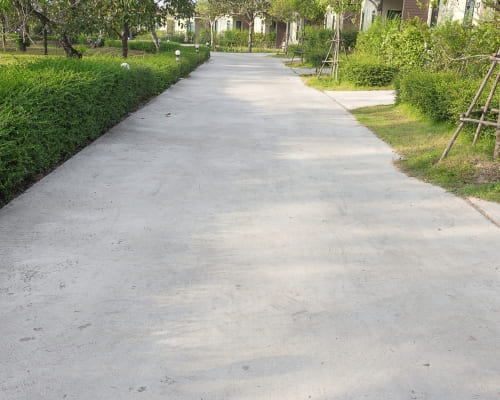
Peak Concreting Cranbourne pours new concrete as well as resurfacing old concrete, and that matters because it removes any reason to cover a slab that ought to be replaced. A resurfacing-only operator has one product to sell. A concreter can quote whichever repair will actually last, whether that is an overlay, a partial replacement or a new slab.
Every resurfacing job starts with a slab check on site. The surface is walked, tapped for hollow or delaminated patches, checked for cracks that are still moving, and looked at for how it drains. The written quote then lists the preparation method, the repairs, the overlay system, the number of coats, the sealer and the curing times, so two quotes can be compared on what is actually being done rather than on a single number.
Local ground knowledge counts here. A sandy township block, a reactive clay lot in a newer Cranbourne North estate and a lower-lying property toward Cranbourne South fail in different ways, and the preparation is adjusted to suit each one. The same crew works across the wider City of Casey and Cardinia Shire corridor, from the older driveways of Hampton Park to long rural driveways in Devon Meadows. If resurfacing is not the right answer for a slab, the quote says so and explains what is.
Peak Concreting Cranbourne
What Concrete Resurfacing Costs in Cranbourne
Concrete resurfacing is priced per square metre, and only after the slab has been seen, because the condition of the old concrete decides how much work goes in before the overlay. As a general ordering, a plain spray-on texture is the most economical overlay, a stencilled pattern costs more because of the stencil and the second colour, and a microtopping sits higher again per metre because it is hand-trowelled in several thin coats. All three usually cost considerably less than breaking out and repouring the same area, which is the main reason owners look at resurfacing in the first place.
How a per square metre resurfacing price is built
The rate covers preparation, crack and spall repairs, primer, the overlay coats, the sealer and labour. Area matters, because set-up and grinding time are spread across fewer metres on a small path than on a double driveway, so a small job carries a higher rate per metre. Access, slope, the number of steps and edges to detail, and whether the crossover is included all move the figure. A quote should itemise these, so that a lower price can be checked for preparation that has been left out.
Why preparation is often the larger part of the cost
On a weathered slab with old sealer, oil stains and a scatter of cracks, grinding and repairs can take longer than applying the overlay itself. This is the stage cheaper quotes tend to cut, and it is the stage that decides whether the overlay is still bonded five years later. Painted or previously coated surfaces need the old coating removed completely before anything new goes down. Ongoing costs are lower but not zero: the sealer is renewed every few years depending on traffic and sun, and that upkeep belongs in the real cost of any resurfaced finish.
Peak Concreting Cranbourne
Resurfacing Versus Replacing: Which Slabs Can Be Overlaid
Resurfacing renews the surface. It does not change the slab underneath, and that is the whole test. If the concrete is structurally sound and the problem is how it looks or wears, resurfacing is usually the better value. If the problem is movement, drainage or a slab that is broken through, an overlay only hides it for a while.
Signs a slab is sound enough to resurface
The slab is level, or has settled evenly, with no trip edges between sections. Any cracks are fine, stable and not widening. The surface does not sound hollow when tapped, water drains off instead of pooling, and the edges are intact. Wear, staining, faded colour, light surface scaling and old patch repairs are all cosmetic problems, and all of them suit an overlay.
Heaved, sunken or moving slabs that need replacing
Slabs lifted by tree roots, sections that have dropped at the joints, cracks that open and close with the seasons and concrete that is broken right through all point to a problem below the surface. On the reactive clay of the newer estates, seasonal movement can keep cracking a slab for years, and an overlay will crack along exactly the same lines. These slabs are better cut out and replaced on a properly prepared base, as described for concrete driveway replacement. Often only part of a slab needs replacing, and the remainder can be resurfaced so the old and new sections match.
Resurfacing compared with resealing or painting
Resealing is the right call when the surface is in good condition and only the protection and colour have faded. It costs less, but it adds no new wearing layer. Concrete and paving paints are the cheapest option of all, but they form a film that tends to peel under hot tyres and needs redoing often. Resurfacing sits between these and a repour: it adds a new cementitious surface that hides wear and old repairs, and it outlasts paint by a wide margin when the slab beneath is sound.
Peak Concreting Cranbourne
Driveway Resurfacing in Cranbourne
Driveways account for most resurfacing requests in Cranbourne, because they carry the most wear and are the first thing seen from the street. Many in the established parts of Cranbourne and nearby suburbs such as Hampton Park were poured decades ago, and the slab is often still sound while the top has weathered, darkened or been patched more than once. A driveway overlay has to cope with turning tyres, oil, summer sun and the weight of vehicles, so a spray-on or stencil system rated for vehicle traffic is used rather than a foot-traffic microtopping.
Resurfacing a driveway and its crossover
The crossover, the section between the footpath and the road, is often included so the whole driveway matches. A vehicle crossing sits in the road reserve, and works to it generally need consent from the City of Casey or Cardinia Shire, so the quote states whether the crossover is in scope and who is arranging the permit. Edges at the garage door, the footpath and the kerb are detailed so the overlay finishes cleanly without leaving a lip to catch a mower or a heel.
Oil stains, tyre marks and hot-tyre pickup
Oil soaks into old concrete and has to be drawn out or ground away before an overlay will bond over it, or the coating lifts in that patch. Black tyre marks on a sealed driveway are often hot-tyre pickup, where a soft sealer softens under hot tyres and is marked or lifted. The fix is a sealer suited to vehicle traffic, applied at the correct thickness, not more coats of the same sealer. A mid-tone colour and a textured finish both help hide the marks every driveway collects.
Carrying control joints and cracks through an overlay
Control joints in the original slab exist so that it cracks in a straight line where cracking is expected. An overlay has to follow them: the joints are kept open or re-cut through the new surface, because bridging them simply moves the crack into the new finish. Stable cracks are repaired first, and where a crack is likely to return it can be turned into a deliberate line in the stencil pattern rather than left to appear at random.
Peak Concreting Cranbourne
Resurfacing Paths, Patios, Pool Surrounds and Garage Floors
The same overlay systems suit most other slabs around a house, with the finish chosen to match how each surface is used and how often it gets wet.
Paths and side access
Paths and side access ways are resurfaced to match a driveway or to lift a tired entry. Narrow paths take longer to grind and detail for their area, which shows in the per-metre rate. Trip edges between path sections are ground or patched level first, because an overlay follows whatever shape is underneath it. A path that has broken up or sunk is a candidate for a new pour instead.
Patios and alfresco slabs
Patios and alfresco slabs are often resurfaced during an outdoor renovation, where a smooth microtopping or a stencilled tile pattern changes the look without breaking out a slab that sits under a pergola or roof. Falls are checked so water still runs away from the house, and the finish is sealed against food, drink and barbecue stains.
Pool surrounds that stay cool and non-slip
Pool surrounds need a finish that is comfortable underfoot and safe when wet. A light-coloured, textured spray-on overlay stays cooler than dark concrete, and an anti-slip additive in the sealer adds grip. Pool chemicals and splash-out are hard on sealers, so a pool surround is usually resealed more often than a driveway. The overlay stops at the coping and at any expansion joint around the pool shell.
Garage floors
Garage floors take oil, hot tyres and dropped tools. A microtopping or thin overlay under a polyurethane sealer gives a clean, easy-to-sweep surface. Where moisture is rising through a garage slab, which happens on older slabs without a working vapour barrier, a coating can blister, so moisture is tested before a system is chosen.
TESTIMONIALS
What Our Concrete Resurfacing Customers Say About Us
The Process
3 Step Process For Your Concrete Resurfacing Needs

1. Free On-Site Assessment and Quote
Every job starts at the property. The area is measured, the existing concrete or bare ground is checked for movement, drainage and access, and the finish and budget are talked through on site. A fixed, itemised written quote follows, listing the preparation, the concrete or overlay system, the finish and the sealer, with any variation agreed in writing before work starts. There is no pressure and no obligation. Call 0485 032 128 to book an assessment.

2. Preparation, Then the Pour or Overlay
Once the quote is agreed, the site is prepared for the ground it sits on. For new concrete that means excavation, a compacted base, formwork, reinforcement and control joints set out to suit sandy Cranbourne soil, reactive clay or engineered fill. For repairs and resurfacing it means cleaning, grinding and fixing cracks before anything new goes down. The concrete or overlay is then placed and finished, with the timing set around heat, wind and rain.

3. Curing, Clean-Up and Handover
New concrete and overlays are cured before they carry any real load, which is what gives them their strength and limits surface cracking. Formwork is removed, the site is cleaned, and the handover covers when the surface can be walked on, driven on and washed, and how and when it should be resealed.
Concrete Resurfacing in Cranbourne
FREQUENTLY ASKED QUESTIONS
Everything you need to know about our Concrete Resurfacing in Cranbourne
Is resurfacing concrete a good idea?
Resurfacing is a good idea when the slab is structurally sound and the problem is the surface: wear, staining, faded colour or old patches. It gives a new finish for a fraction of the disruption of a repour. It is a poor idea on a slab that is heaving, sinking or still cracking, because the overlay will fail along the same lines. A slab check on site settles which category a slab falls into.
Can concrete be resurfaced as a DIY job?
Retail resurfacing products are sold for small patches and touch-ups, and they can work on a small, sound area. The difficult part of resurfacing is not the coating but the preparation: grinding off old sealer, removing oil, repairing cracks and priming the slab so the overlay bonds. Skipping those steps is the most common reason a DIY overlay peels. Driveways and large areas are usually better done with grinding equipment and a commercial overlay system.
What is the best thing to resurface concrete with?
For most outdoor slabs the best option is a polymer-modified cementitious overlay, because it bonds to the old concrete and wears like concrete rather than like paint. A spray-on texture suits driveways and paths, a stencilled overlay suits a patterned look, and a microtopping suits smooth alfresco and garage floors. The sealer on top matters almost as much as the overlay, especially on a driveway where hot tyres can mark a soft sealer.
Can a thin coat of concrete be put over existing concrete?
Ordinary concrete laid in a thin layer over an old slab tends to crack and lift, because it is too thin to carry itself and does not bond well on its own. That is why resurfacing uses polymer-modified mortars designed to bond at a few millimetres thick. Where extra height is genuinely needed, a properly designed topping with its own thickness and reinforcement is a different job. For most tired surfaces, a thin bonded overlay is the correct tool.
How much does concrete resurfacing cost per square metre in Cranbourne?
Resurfacing is quoted per square metre after the slab has been inspected, because preparation and repairs vary so much from one slab to the next. A plain spray-on finish is the most economical option, a stencilled pattern costs more, and a hand-trowelled microtopping more again. Small areas carry a higher rate per metre than large ones. In most cases resurfacing costs considerably less than breaking out and repouring the same area.
How long does resurfaced concrete last?
A well-bonded overlay on a sound slab lasts many years, and the main variable is the sealer rather than the overlay itself. Driveways need resealing more often than paths or patios because of tyres, oil and sun exposure. Overlays fail early when preparation was skipped or when the slab underneath keeps moving. Keeping the sealer in good condition is the cheapest way to extend the life of the finish.
Request A Free Concrete Resurfacing Quote
BUSINESS
SERVICES
OPERATING HOURS
Sun: 7:00am - 9:00pm
Mon: 7:00am - 9:00pm
Tue: 7:00am - 9:00pm
Wed: 7:00am - 9:00pm
Thu: 7:00am - 9:00pm
Fri: 7:00am - 9:00pm
Sat: 7:00am - 9:00pm